Understanding Industrial Wastewater
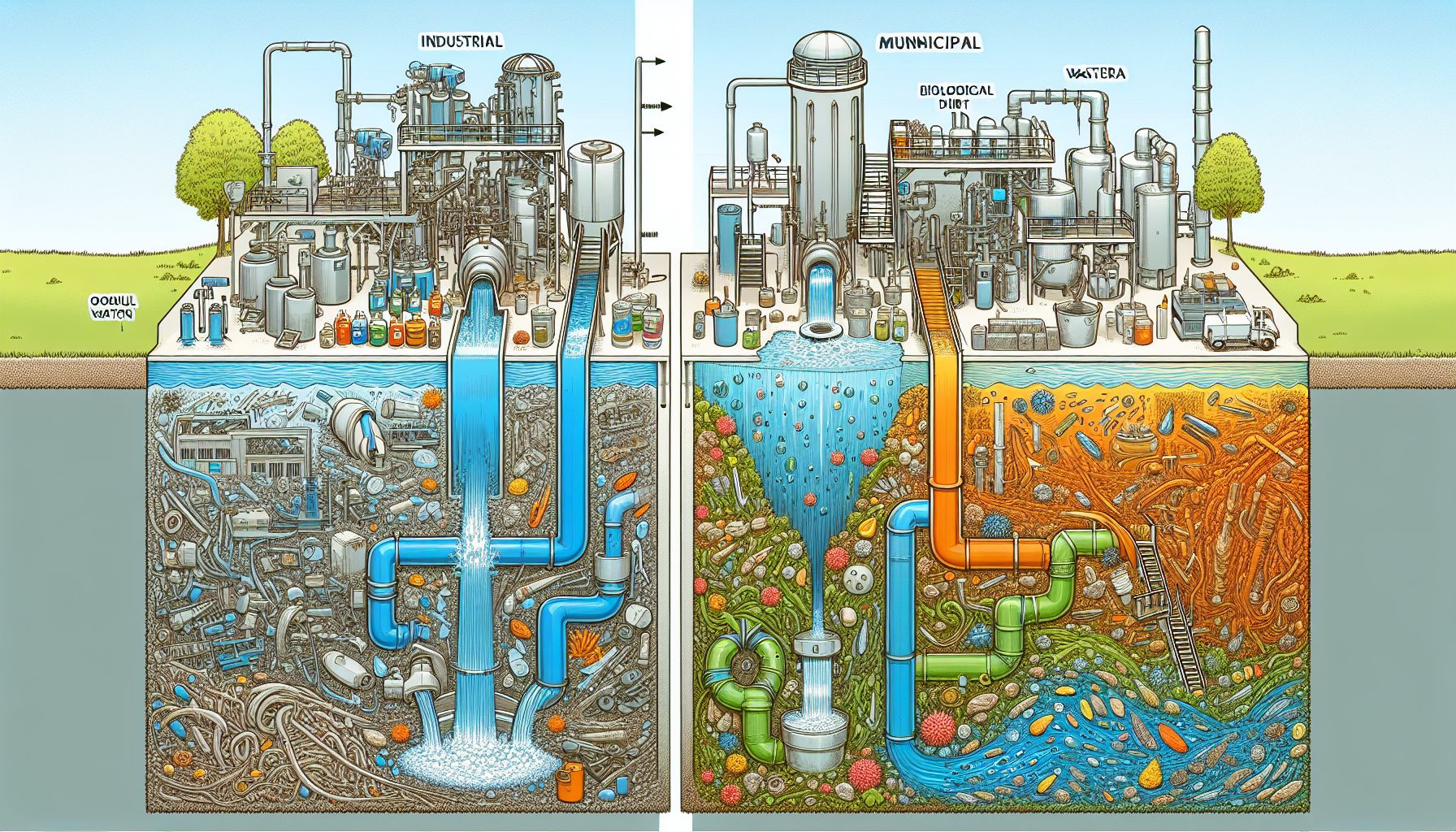
Industrial wastewater is water that has been contaminated by industrial or commercial activities, and includes both water from production processes and runoffs. It often contains hazardous substances, pollutants, or other potential contaminants that are harmful to both human health and the environment. This makes industrial wastewater more challenging to treat than municipal flows.
Treating this water is necessary to remove harmful substances before it re-enters the hydrological cycle. However, due to the high variability of toxins and contaminants present in industrial wastewater, the treatment process is more complex and demanding.
According to the industrial wastewater guidance from the Environmental Protection Agency, variability in pollutant concentration and types significantly adds to the challenge as industries differ in their wastewater characteristics.
The Complex Composition of Industrial Wastewater
Industrial wastewater can be derived from various sources like the petrochemical sector, pharmaceutical industry, mining, power generation, and much more.
Depending on the industry type, the wastewater generated might contain organic pollutants, inorganic compounds, heavy metals, toxic substances, bacteria, and radiological hazards. This variety in pollutants not only manifests in industrial wastewater’s more arduous treatment process but also increases the risk associated with improper disposal.
By contrast, municipal wastewater mainly consists of domestic sewage from households, containing organic pollutants like fats, oils, and grease, as well as nutrients like phosphorus and nitrogen from human waste.
The Challenges in Treating Industrial Wastewater
Different pollutants require specific treatment techniques, which make the handling of industrial wastewater tougher and more time-consuming compared to municipal wastewater.
For instance, wastewater from metal industries will have heavy metals like lead, mercury or cadmium. These substances can be toxic, even in tiny amounts and require chemical treatments like precipitation, ion exchange or reverse osmosis to remove.
Some industries also produce wastewater that contains resistant pathogens or high concentrations of resistant microorganisms. Such pathogens cannot be eradicated by simply applying conventional wastewater treatments and need additional procedures like ultraviolet sterilization.
Combined with the sheer amount of wastewater industries can generate and the need for constant water supply, these factors intensify the challenges involved in treating industrial wastewater.
The Impact of Different Regulations
The regulations for treating wastewater also significantly differ between industries and municipalities, as governed by the Clean Water Act or the Resource Conservation and Recovery Act, among others.
For example, some industrial facilities are required to treat their wastewater to a certain extent before discharging it to a municipal sewage treatment plant. However, the acceptable levels of pollutants that can be discharged vary and are specific to each industry based on their potential to pollute.
On the other hand, municipal wastewater discharges are more standardized, limited to domestic sewage and a few other types, making the regulatory compliance and treatment process simpler comparatively.
The Need for Advanced Technology
High concentrations of different types of pollutants in industrial wastewater demand more advanced and specialized treatment technologies which may not always be readily available or feasible to implement due to high costs or technical limitations.
Whether it’s using bioreactors to treat organic waste or reverse osmosis for salt removal from wastewater, the need for such advanced technologies makes the treatment of industrial wastewater complex and costly compared to municipal wastewater.
In conclusion, the treatment of industrial wastewater is far more complex than that of municipal wastewater due to several reasons, including the variability of pollutants, specialized treatment requirements, stricter regulations, and the need for advanced technology. The impacts of not effectively treating this wastewater can be considerable, with serious consequences for both human and environmental health.
Understanding these challenges is crucial to develop and implement effective strategies that help industries comply with regulations and ensure the sustainable management of water resources, an issue that is central to everyone’s well-being and future survival. Further study and continuous research are key to advancing in this important field. For more on this subject, refer to the US Geological Survey and National Institute of Environmental Health Sciences websites.