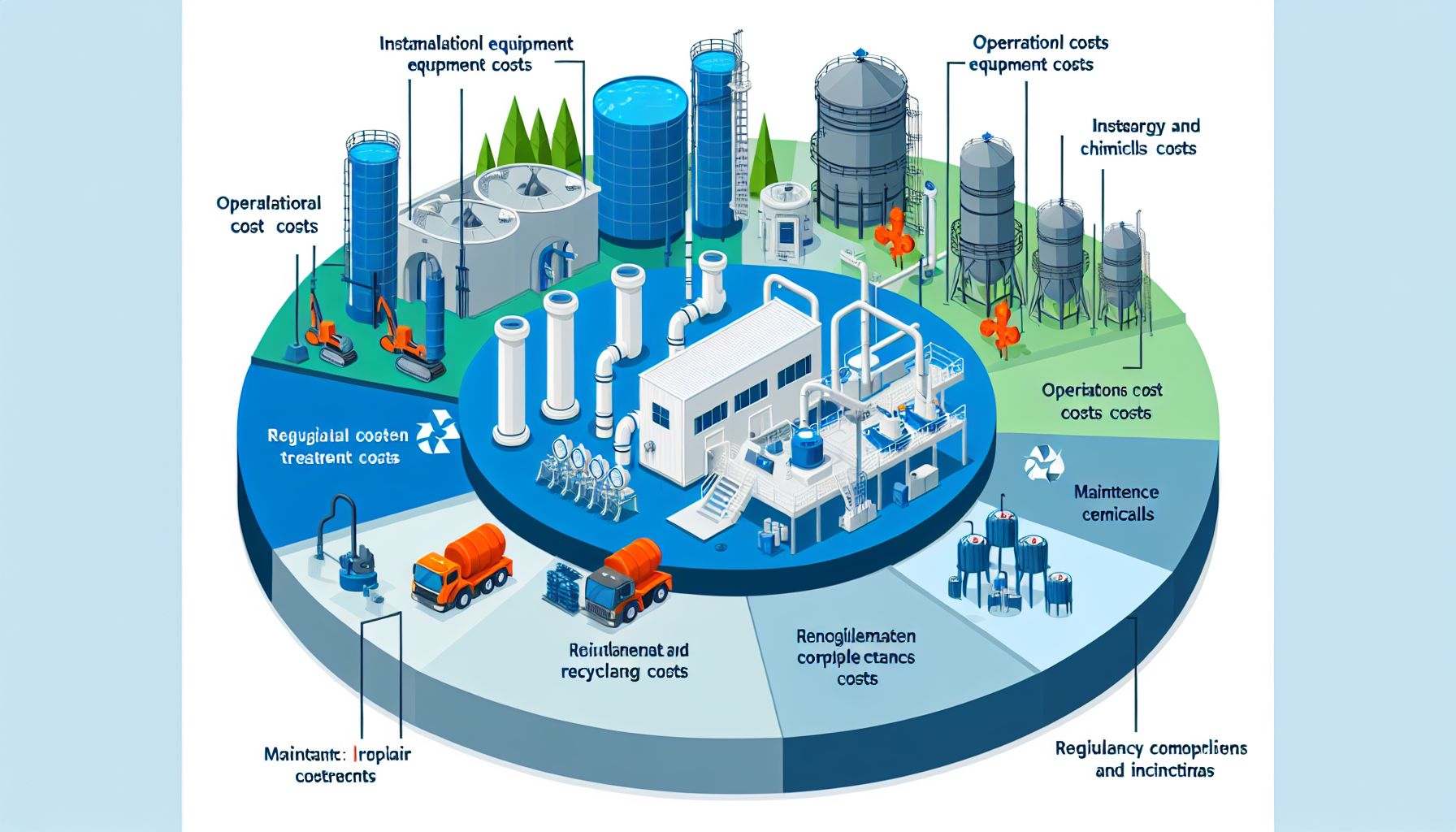
Industrial wastewater treatment strategies vary, running the gamut from physical treatments to complex biological and chemical processes. The factors driving costs in industrial wastewater treatment projects extend beyond just the required technologies. These include regulatory compliance, industrial sector, geographic location, and the scale of operation. Each parameter tends to affect ongoing operational expenditure and upfront project development costs. Understanding these cost drivers provides a window into how companies can control and predict treatment expenses.
Regulatory Compliance
Regulatory compliance is a critical consideration when gauging costs associated with industrial wastewater treatment projects. Industry operators usually have to meet federal, state, and local regulations when treating and disposing of wastewater. The nature of these regulations often determines the required treatment methodologies, thereby influencing overall project costs.
Key regulatory requirements include pre-treatment standards set up by the Environmental Protection Agency (EPA), specific limitations on pollutant discharges (effluent guidelines), and overarching water quality standards. Stringent wastewater discharge limits often necessitate more sophisticated treatment processes and technologies, resulting in higher costs. Deciphering the relationship between regulations and cost implications in wastewater treatment becomes highly essential. The National Academy of Sciences does present a range of industrial infrastructure cost studies articulating these relationships.
Industrial Sector
The industrial sector is another key determinant of wastewater treatment costs. Different industries generate distinct types of wastewater. For instance, a food processing plant may generate organic waste, non-toxic byproducts, and impurities. In contrast, a chemical plant may discharge wastewater loaded with toxic and non-biodegradable pollutants.
The variety of pollutants dictates the treatment methods required, the level of pre-treatment needed, and, consequently, the project cost. For example, food processing plants can often employ biological treatments, which are generally more cost-effective. Meanwhile, chemical plants may have to resort to more complex physicochemical treatments that attract higher costs.
Geographic Location
The location of the industrial facility plays a crucial role in determining wastewater treatment costs. Variables such as local wastewater regulations, climate, and proximity to disposal sites or water bodies can significantly impact costs.
In regions with stringent local wastewater regulations, industries might face higher costs to ensure compliance. Areas with colder climates may incur increased operational expenditure, considering that temperature sensitivity affects most biological and physicochemical treatment processes. For facilities located far from disposal sites, transportation costs become an added expense.
Scale of Operations
The scale of operations significantly influences the cost profile of industrial wastewater treatment projects. Larger facilities typically have higher volumes of wastewater to manage, thus necessitating more extensive treatment infrastructure. This situation could lead to elevated capital expenditure for large-scale projects.
Nevertheless, economies of scale can come into play. For instance, a larger plant treating substantial wastewater volumes might achieve lower costs per unit of wastewater treated compared to a smaller facility. Conversely, smaller projects may face disproportionately high costs due to the fixed nature of certain expenses such as regulatory compliance and licensing fees, regardless of the amount of wastewater treated.
Technological Choices
Technological choices can be one of the most direct and significant influences on costs for industrial wastewater treatment projects. Factors for consideration include the required level of treatment, established expertise, and the need for flexibility in treating different waste streams.
For instance, more conventional technologies like activated sludge processes offer reasonable treatment proficiency but may demand large aeration tanks and other infrastructure, thus increasing costs. In contrast, advanced technologies like membrane bioreactors might command higher capital investment but could offer more efficient pollutant removal or beneficial wastewater reuse opportunities.
Thus, the decision on treatment technology becomes a strategic balance between project goals, cost constraints, efficiency, and sustainability of the solution.
Overall, the cost drivers in industrial wastewater treatment are multifaceted. They range from external factors like regulations and geographic location to the business’s industrial sector and strategic decisions regarding technology deployment. Individuals and companies planning wastewater treatment projects must carefully consider these factors when estimating costs and setting budgets. Such understanding could significantly influence project design, technology selection, operational efficiency, and ultimately, cost-effectiveness.