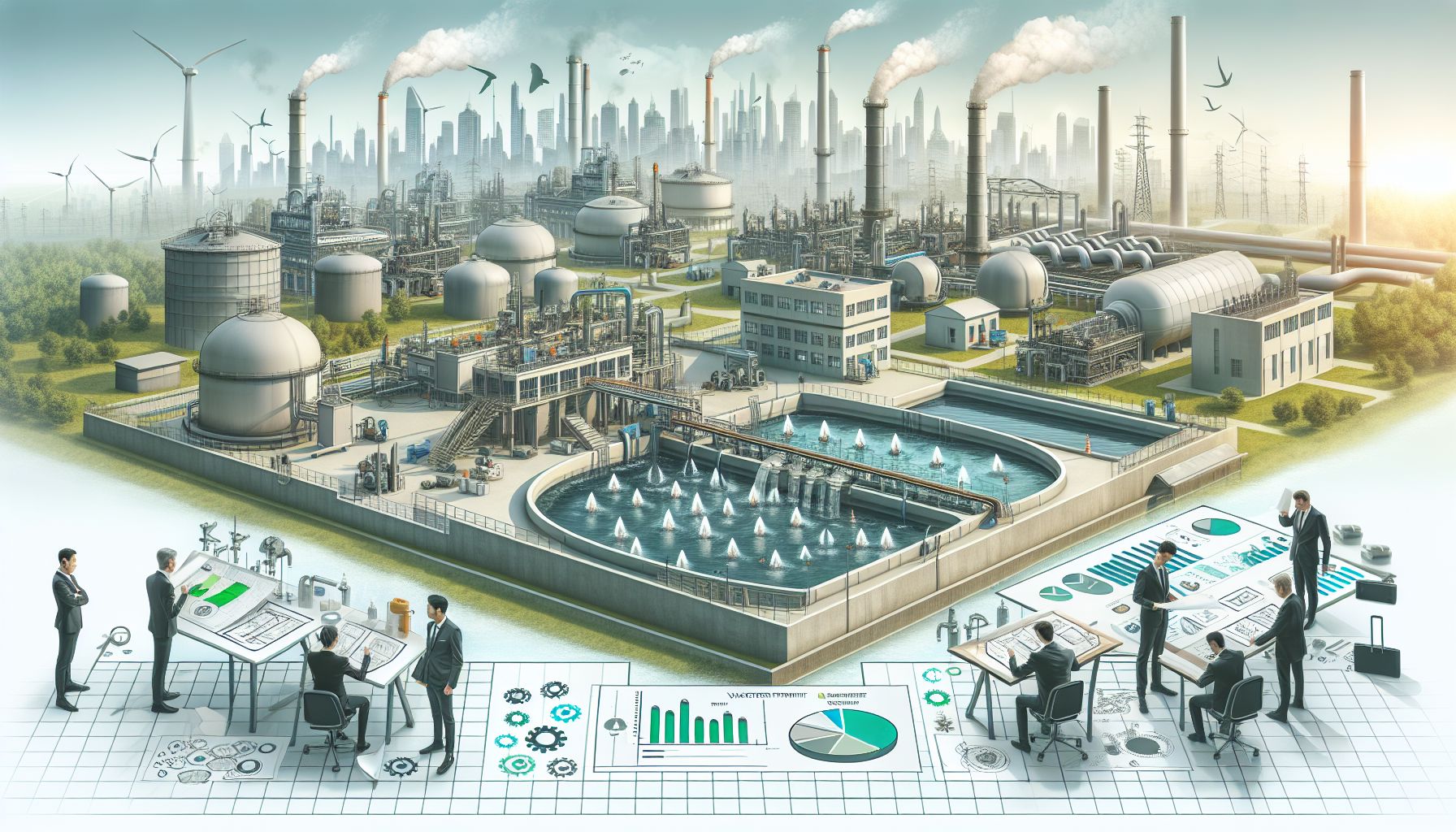
The process of planning wastewater treatment capacity for industrial growth is a critical component of responsible, sustainable industrialization.
Understanding The Importance Of Wastewater Treatment In Industrial Settings
In the context of industrial facilities, wastewater is commonly generated as a by-product of various processes. The treatment of this wastewater is crucial to meet environmental regulations, protect public health, and conserve water resources. If an industrial firm plans to expand or increase its production, the volume of wastewater generated is expected to increase. Therefore, it is necessary to plan for additional wastewater treatment capacity.
The Role Of Capacity Planning
Capacity planning is the process of determining the production capacity needed by an organization to meet changing demands for its products or services. It involves proactive planning to assure that an industry can appropriately handle increasing amounts of wastewater given anticipated growth. Apart from ensuring regulatory compliance, it can also drive reductions in operation costs and environmental impacts.
The Small Business Administration offers excellent capacity planning guidance for businesses of all sizes. It can be applied to diverse business activities, including wastewater treatment.
Planning Wastewater Treatment Capacity
There are several steps in planning wastewater treatment capacity:
-
Estimating future demand: This involves forecasting an increase in wastewater volume based on planned growth and involves an understanding of the relationship between production volumes and wastewater generation.
-
Evaluating current capacity: Identify the maximum amount of wastewater that current infrastructure can treat effectively.
-
Bridging the gap: If future demand exceeds current capacity, the business will need to determine how to close that gap. Options might include upgrading existing equipment, adopting more efficient treatment technologies, or building additional treatment facilities.
Real-World Considerations
There are a number of real-world considerations that must be taken into account during capacity planning:
-
Regulatory requirements: Regulatory bodies often set strict guidelines on the quality and volume of wastewater that can be discharged. These requirements might change over time due to policy developments or shifts in environmental priorities.
-
Technological advances: New wastewater treatment technologies might emerge that allow for more efficient treatment. Adopting these technologies can improve capacity without hugely expensive infrastructural changes.
-
Sustainability goals: Companies today are also increasingly committed to sustainability initiatives. Efficient wastewater treatment can be a vital part of achieving these environmental objectives.
Common Issues And Solutions
One common problem is the underestimation of future wastewater volumes. This can lead to inadequate treatment capacity and non-compliance with regulatory guidelines. A possible solution here is to build flexibility into the capacity planning process. For example, a modular design approach allows for incremental upgrades to match growth.
Another major issue can be financial constraints. Upgrading wastewater infrastructure can be expensive. In such cases, a possible strategy is incremental investments over time, parallel to the industrial growth.
There are numerous financial programs available to assist with these costs, such as the Clean Water State Revolving Fund (CWSRF). CWSRFs operate around the country, providing low-interest loans for water quality projects.
Pros and Cons
Proactive wastewater treatment capacity planning comes with its own set of advantages and possible drawbacks. Advantages include compliance with regulations, cost savings in the long term, and positive environmental impact. Drawbacks might involve the initial investment cost and the challenges in accurately forecasting future growth.
Conclusion
Planning wastewater treatment capacity in line with industrial growth is a vital aspect of business growth strategy. It involves technical, operational, and financial evaluations along with a keen consideration for environmental sustainability. To further optimize this process, businesses can seek guidance from public resources like the Occupational Safety and Health Administration (OSHA), offering valuable information about wastewater treatment for adapting industrial growth.